From idea to validated candidate
Three steps, one platform. Here is what a real discovery run looks like.
Describe
Type your target in plain language. Spectra decomposes it into a formal generation spec, and a deterministic router selects the right model variant for the job. No prompt engineering, no file wrangling. Prefer a fine-grained approach? Review the generated spec, adjust objectives and constraints, and pick model variants manually at any point.

Generate and rank
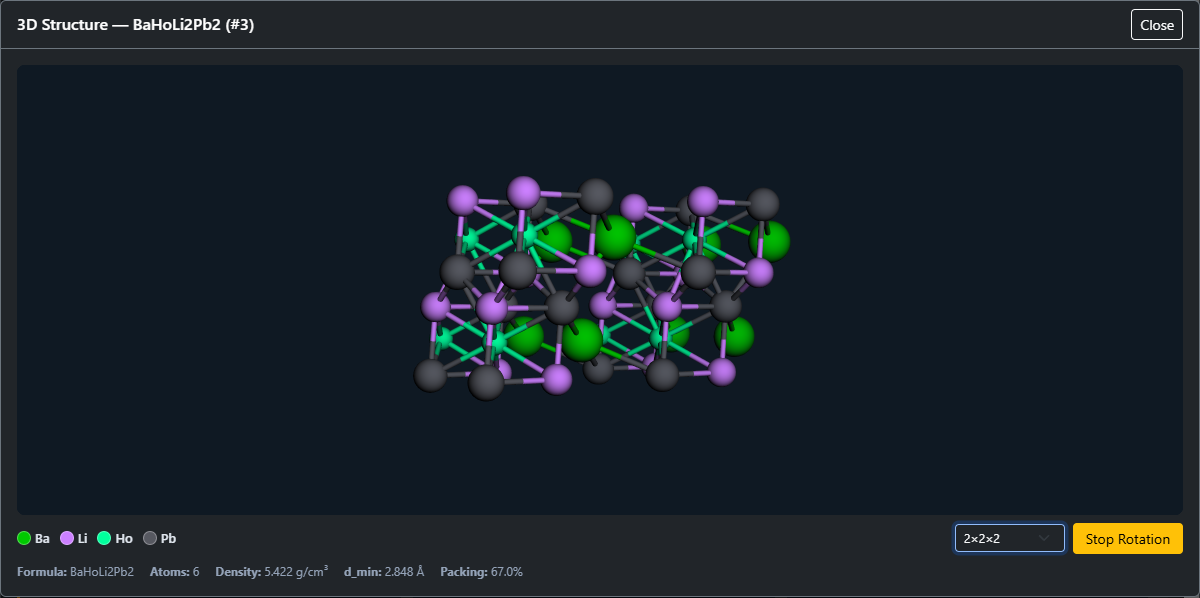
Generative models (MatterGen for inorganic crystals, FM4M and GT4SD for molecules) propose candidate structures. Every candidate is scored for structural quality and ranked, with an interactive 3D viewer for each structure.
Analyze and report
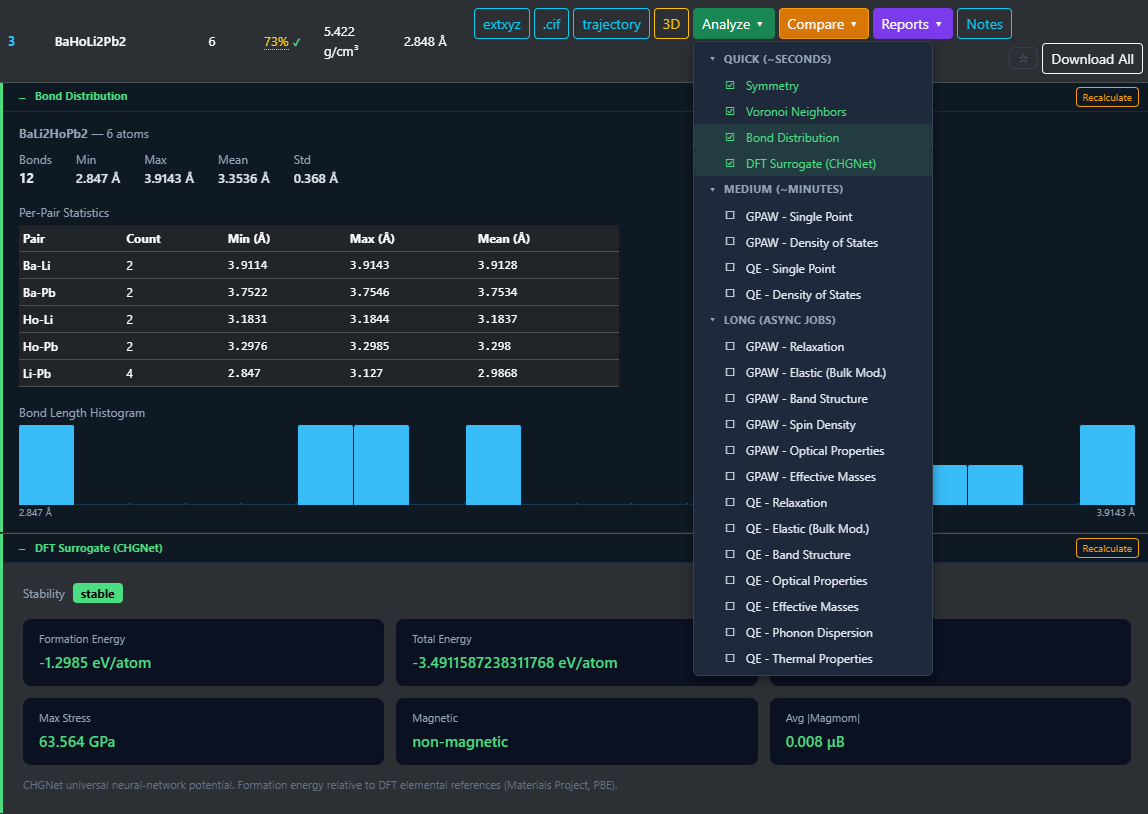
Run symmetry, bonding, and stability analyses. Validate top candidates with DFT (GPAW and Quantum ESPRESSO). Compare against known materials in external databases. Export formal patent-grade reports.
Every run ends in a report you can act on
Structure, symmetry, predicted properties, comparisons against known materials, synthesis considerations, and economics: assembled into a formal document ready for your team, your patent counsel, or your next grant report.
Download sample report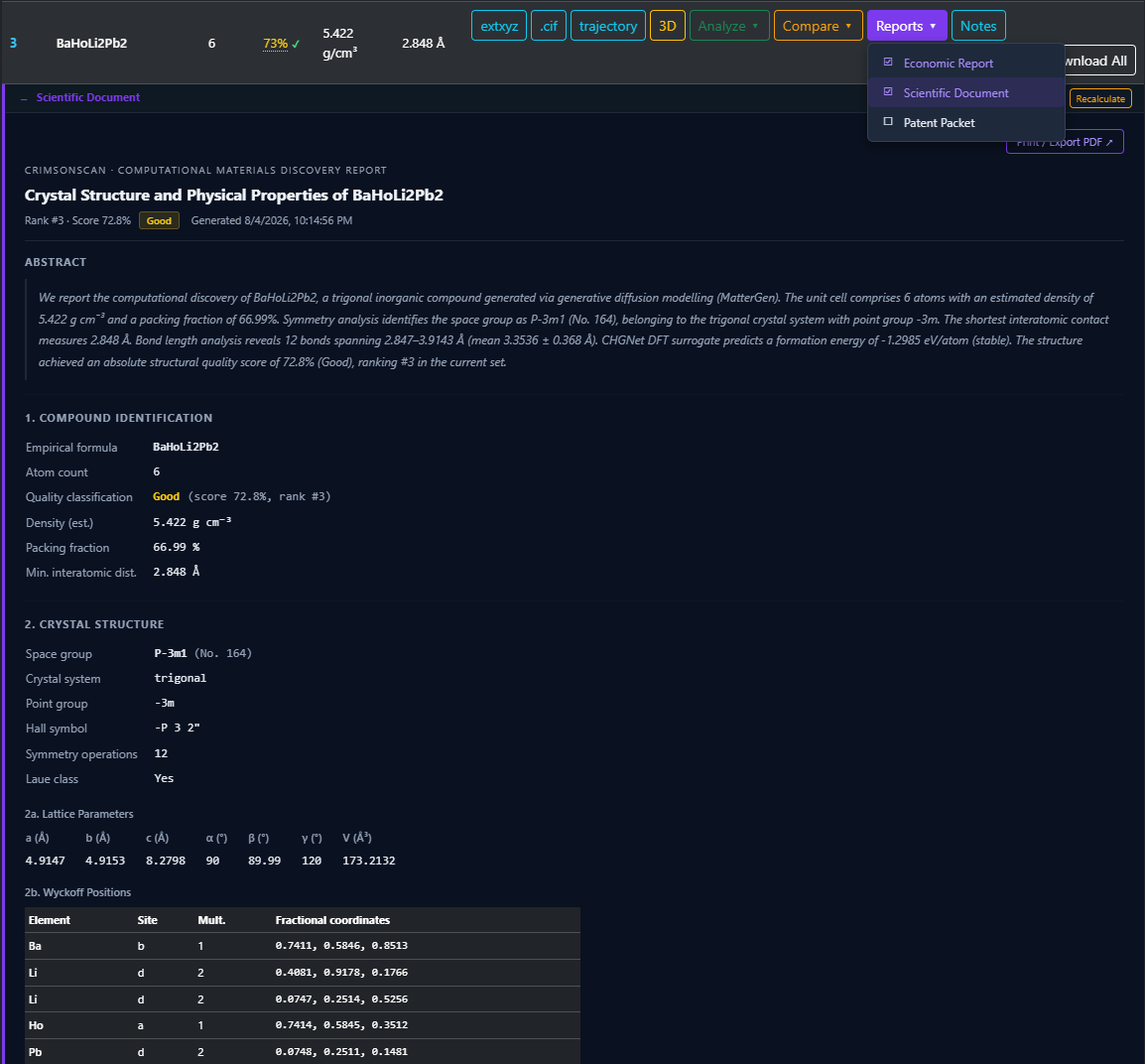
Common questions
What models power Spectra?
MatterGen for inorganic crystal generation, IBM FM4M and GT4SD for molecular work, with pymatgen-backed structural analysis and DFT validation via GPAW and Quantum ESPRESSO. A deterministic router selects the right variant for each objective. You can let the router choose automatically, or manually select and tune model variants for fine-grained control.
What domains are covered?
Inorganic crystals and small molecules today, spanning energy storage, catalysis, electronics, and structural materials objectives. Additional domains are on the roadmap.
How is my data handled?
Researcher-tier runs are stored and may contribute anonymized candidate structures to a pooled research dataset used to improve the platform. Your account data and queries are never sold. Enterprise plans can opt out of pooling entirely, with data residency and run-in-your-cloud options.
Or see pricing